Write with a visual hierarchy to allow your readers to scan your copy
Use plain, obvious terms, like “about” in the navigation, instead of something clever but obscure
Use white space and page layouts to effectively communicate your message
In other words, you should eliminate friction from your pages. Friction describes the psychological resistance the elements on a page may generate in your visitors. Friction can distract your visitors from the goal you have for the page.
How to start overcoming friction
Before you can cut friction and take Wilson’s advice to “work with human nature and not against it,” you’ll need to answer two questions:
What is your page’s goal? Is your goal to maximize the number of blog posts each visitor reads? To drive comments? Build your email lists? Sell a product?
Who are your visitors? Where are they coming from? What motivates them? What do what want from your site?
Answering these questions can help you drive the design and copy decisions Wilson identifies and thereby friction.
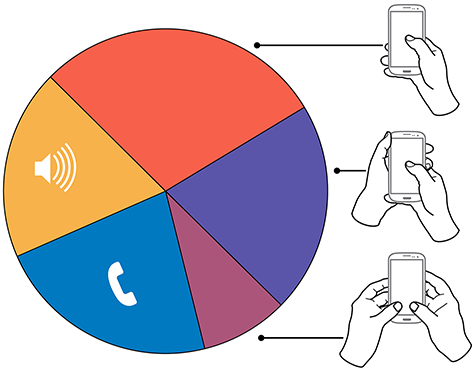
Steven Hoober has done an interesting analysis of how people actually hold their mobile devices–it’s far more complex than just portrait and landscape orientation–and what this might suggest for interface design.
How people hold and interact with mobile phones. Image: UX Matters
“Just because someone has signed up to your service doesn’t mean they have agreed to receive email from you,” Paul Boag writes.
This is an important distinction. As part of the sign-up process, you may have indicated that you will email them, or you may have even provided an option for them to opt out. However, if the user didn’t spot this, then you will still alienate them, despite being entirely within your rights. The email is still unsolicited in their eyes.”
The “superdistribution” of content online–users can access your content not just on your website but via RSS readers, social media, and orbital content readers–has changed the one-to-many distribution model, David Sleight writes:
[D]igital content continues to find novel new ways to wander away from its various points of origin. Tools that give users ever more control over formatting, timeshifting, and sharing will continue to proliferate. This steady growth runs directly counter to the simple, one-to-many broadcast model enjoyed by many publishers in the past—one where it was relatively easy for them to control the venue and keep tabs on the conversations happening around their content.
Bell Labs engineer John Karlin helped pioneer the use of behavioral testing in industrial design. His New York Times obituary offers this nugget:
Mr. Karlin also introduced the white dot inside each finger hole that was a fixture of rotary phones in later years. After the phone was redesigned at midcentury, with the letters and numbers moved outside the finger holes, users, to AT&T’s bewilderment, could no longer dial as quickly.
With blank space at the center of the holes, Mr. Karlin found, callers no longer had a target at which to aim their fingers. The dot restored the speed.
Karlin, the Times reports, “stud[ied] the psychological capabilities and limitations of ordinary people” to identify telephone designs that maximized usability.