Tradition lives on →
Tim Stanley: “How reassuring to know that the British are still capable of carving up large parts of the world and renaming them after monarchs!”
Tim Stanley: “How reassuring to know that the British are still capable of carving up large parts of the world and renaming them after monarchs!”
Daniel Burstein explains some interesting research into how marketers can leverage humans’ natural curiosity to improve e-mail performance.
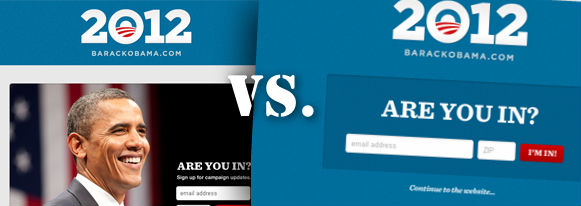
Time’s writeup of the Obama campaign’s online and data efforts, linked earlier, is fascinating reading.
Constant optimization with A/B testing played a big role in the campaign’s fundraising efforts (emphasis added):
A large portion of the cash raised online came through an intricate, metric-driven e-mail campaign in which dozens of fundraising appeals went out each day. Here again, data collection and analysis were paramount. Many of the e-mails sent to supporters were just tests, with different subject lines, senders and messages. Inside the campaign, there were office pools on which combination would raise the most money, and often the pools got it wrong. Michelle Obama’s e-mails performed best in the spring, and at times, campaign boss Messina performed better than Vice President Joe Biden. In many cases, the top performers raised 10 times as much money for the campaign as the underperformers.
Chicago discovered that people who signed up for the campaign’s Quick Donate program, which allowed repeat giving online or via text message without having to re-enter credit-card information, gave about four times as much as other donors. So the program was expanded and incentivized. By the end of October, Quick Donate had become a big part of the campaign’s messaging to supporters, and first-time donors were offered a free bumper sticker to sign up.
The Obama campaign succeeded online in part because it didn’t know what worked–and admitted it. That’s the hallmark of a good marketer: humility about your skills, a willingness to constantly check your core assumptions.
To succeed as a marketer, you have to take risks and put your ego on the line. As Pixar president Ed Catmull reminds us, “if we aren’t always at least a little scared, we’re not doing our job.”
A/B testing can help you make great leaps in optimizing your online marketing, but it’s not a panacea. It requires a lot of measurement, commitment and patience.
Peep Laja offers three useful warnings:
This is spot on. Most of the tests I have run have failed to achieve any lift, while others were inconclusive statistically even after collecting considerable data. And his final point is critical: focus your testing not on the quick win but on how you can best convince your customers to buy.
If I had to add a fourth point, it’d be this: Run tests only to learn something, not simply for the sake of testing. What question are you trying to answer with your test, and how would the results lead you to do things differently in the future?
When hiring, finding job candidates with the right technical skills is the easy part. Bryan Goldberg offers advice on how to separate the merely adequate applicants from the all-stars:
[I]f a candidate can’t even tell you why they liked their last job, or what they got out of their college experience, or any of the million other questions that speak to their basic humanness… Then no amount of experience will make them valuable.